

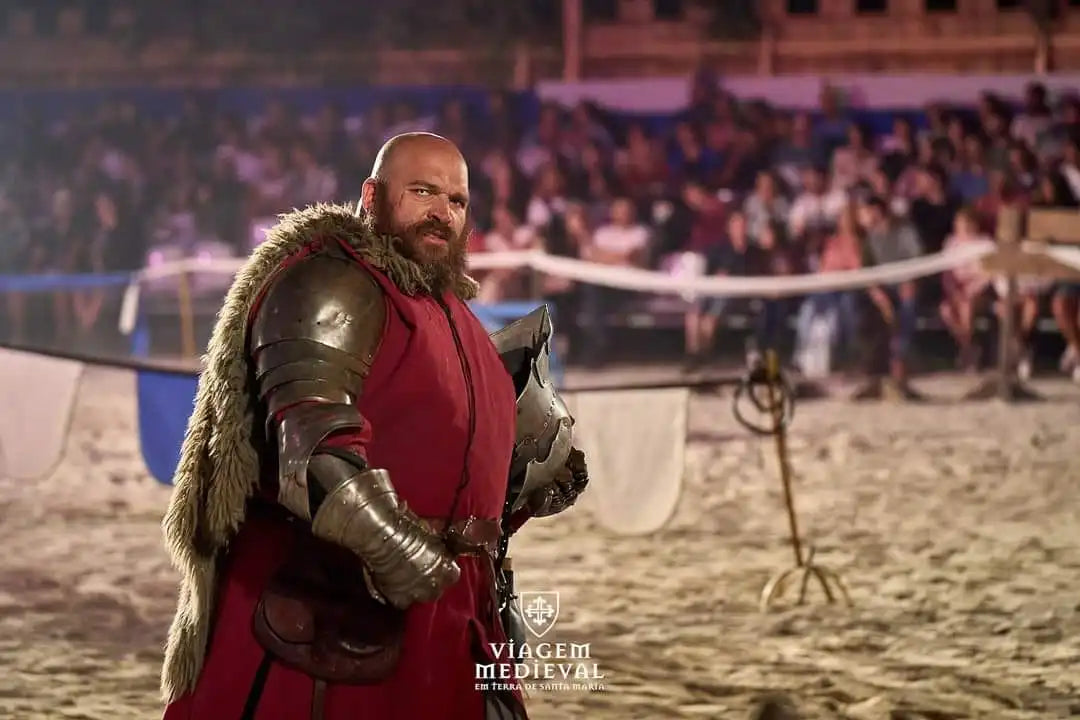

The code of chivalric honor in the Middle Ages
Medieval chivalry was the mounted warrior nobility that emerged with feudalism in the 10th and 11th centuries in Europe. From the 12th century onwards, the Church and the monarchy forged the image of the ideal knight as a miles Christi (soldier of Christ) committed to Christian justice. In the investiture ceremony, the young knight swore loyalty and valor, committing to a series of ethical virtues that formed the chivalric code of honor . These norms combined the warrior spirit with religious and courtly ideals: the knight had to be brave in battle, faithful to his lord, generous to the needy, and courteous to the ladies. He also swore to defend the Church and pilgrims, integrating military duty with Christian piety. Although this code was idealized, it served to distinguish the chivalric class from the rest of the estates and remained a moral model until the end of the Middle Ages.
Check out our Late Middle Ages collection!
 |
 |
 |
Historical origins and social context
The first medieval knights appeared in Western Europe from the 10th century onwards as a military elite descended from Carolingian chivalry. They were nobles with territorial dominions (fiefs) who provided armed service to a more powerful lord in exchange for land or money. In this feudal system , knights defended their lords' domains from invasions or bandits and collected taxes from the peasants living on their lands.
The Catholic Church played a decisive role in transforming chivalry into an ideological institution. It sought to channel noble violence toward sacred ends, imposing a religious oath upon knighthood, promoting the Peace and Truce of God , and founding military orders such as the Templars and the Hospitallers. These initiatives protected the weakest and limited warfare to certain times and places.
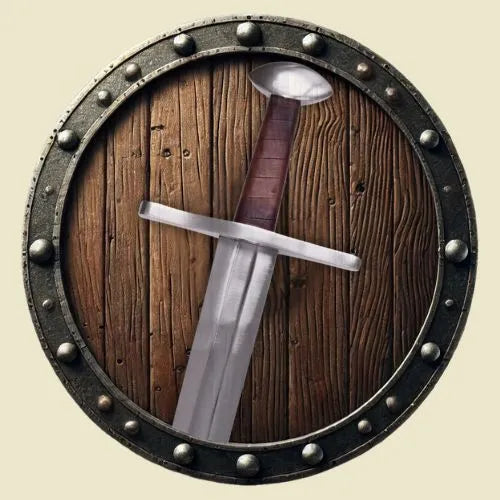
Look at this bastard sword, cool!
The Crusades , which began in the late 11th century, consolidated the image of the knight as a "soldier of Christ." Many nobles saw in them both a spiritual and social opportunity: they embarked on expeditions to protect the Holy Land or fight against enemies of the faith. In the Iberian Peninsula, marked by the Reconquista, indigenous military orders emerged with similar functions.
Throughout the 12th century, chivalry also took on a more courtly profile. Royal courts promoted tournaments, love poetry, and rules of etiquette that refined knightly conduct. The knightly class thus became not only a military elite, but also a cultural one.
Principles and virtues of the gentleman
Chivalric honor was based on a set of essential virtues that defined the ideal conduct of the knight:
-
Valor and courage: Unwavering bravery in combat was expected of the knight. Glory gained in a just war was a source of personal and collective prestige.
-
Loyalty and fidelity: Knights swore obedience to their lord, and keeping their word was a matter of honor. Treason was considered an irreparable stain.
-
Generosity and sacrifice: Giving away material possessions for the benefit of others was a sign of nobility. Knights were expected to help the needy, especially pilgrims, orphans, and widows.
-
Piety and religiosity: He was expected to live according to the Christian faith, respecting the clergy and fighting against the enemies of the Church. The ideal was to be strong in combat and merciful to the defeated enemy.
-
Justice: Acting with justice and avoiding abuses of power were the knight's ethical duties. It was his responsibility to protect the most vulnerable within the feudal order.
-
Courtesy and personal honor: Refined court behavior—speaking politely, singing, dancing—distinguished a knight. Added to this was courtly love, in which the knight paid respectful homage to a lady. Maintaining one's own honor was essential: shame due to cowardice or lack of integrity could ruin one's reputation forever.
I love this combat blade sword!
Church, crusades and military orders
Beginning in the 11th century, the Church allied itself with the knightly class to provide moral guidance. The Crusades were the culmination of this alliance: military campaigns with a religious purpose, in which knights could atone for their sins through combat. The fervor for these expeditions led many to mortgage their property or renounce inheritances.
The investiture ceremony became a sacred rite: it included prayers, vigils, and the blessing of the weapon, in addition to the famous accolade. These practices legitimized the use of force as a means of spiritual protection.
Military orders , both in the East and Western Europe, reinforced this vision. They integrated monastic life and military discipline, making the knight a consecrated warrior. Although not all of them rigorously observed their vows, these institutions projected the ideal of the disciplined, pious, and just knight.
Braveheart Sword. Don't miss it!
Literature and chivalric treatises
Medieval literature played an essential role in the dissemination of the code of chivalry. The exploits of brave, noble, and enamored knights were narrated in epic poems and courtly romances. Works such as the Song of the Cid and Arthurian tales (Tristan and Isolde, Lancelot) idealized the figure of the knight as a protector of the weak and defender of honor.
At the same time, treatises such as Ramon Llull's Book of the Order of Chivalry and Geoffroi de Charny's Livre de Chevalerie systematized these virtues in didactic texts. Both argued that chivalry should serve justice and faith, not personal interest.
At court, courtly love poetry reinforced the idea that a knight should be not only brave but also elegant, faithful to his lady, and virtuous in his manners. Although this ideal sometimes contrasted with the reality of combat, it consolidated a cultural model of great influence in Europe.
Myth versus chivalric reality
Despite the lofty ideal, chivalric practice often fell far short of ethical standards. Many knights were violent lords, interested in plunder or increasing their territorial power. Medieval wars were marked by plundering, cruel sieges, and clashes between rival nobles. The very concept of "honor" was sometimes used to justify personal vendettas or bloody duels.
Cavalry was also expensive. Many lesser knights relied on loans or were forced into dishonorable acts to survive. With the advent of firearms and professional armies in the 14th and 15th centuries, the figure of the mounted knight lost its military centrality. However, the chivalric ideal survived, transformed into a moral and cultural symbol. Don't miss our sword collections!