

The dagger is a double-edged, short-bladed blade, designed for hand-to-hand combat.
Throughout history, it has been used as a secondary weapon, a ritual tool, an object of prestige, and a cultural symbol. Today, although it has lost its primary military function, the dagger lives on in various contexts, adapting with the passage of time and modern technology.
Its current uses range from military and ceremonial purposes to collecting and historical fencing.
In this way, we can also find many types of these weapons, grouped according to different categories and criteria, such as design, country of origin, or functions.
Below, we present a classification of dagger types according to their functions and uses.
Tactical daggers: precision and effectiveness

Tactical daggers are modern tools designed for rapid intervention, self-defense, and special operations. They are primarily used by military forces, commandos, elite police forces, and intelligence agents.
These daggers stand out for their ergonomics, durability, and high-tech materials, such as stainless steel, non-slip polymer handles, and sheaths adaptable to tactical vests.
They are not designed for ornamental purposes, but for functionality.
On night missions, rescues, or silent infiltrations, the tactical dagger becomes an extension of the body. Although its use is strictly regulated, it is also part of the symbolic equipment of many units, representing discipline, loyalty, and extreme preparedness.
Collectible Daggers: Art, History, and Admiration

Collectible daggers are replicas or original pieces with historical, artistic, or emotional value. They are sought after by collectors, historians, museums, historical reenactors, and weapons enthusiasts.
They can be exact reproductions of Roman, Renaissance, or medieval daggers, or stylized designs made with noble materials such as Damascus steel, bronze, ivory, or exotic woods.
In addition to their aesthetic value, these daggers often feature engravings, heraldic symbols, religious or philosophical inscriptions, and details that narrate their origin or purpose.
(Image of the Boabdil Dagger, Marto )
For many, they are objects of contemplation and memory, representing the connection between past and present. Some collections even explore daggers from ancient cultures such as Egypt, Celts, and Japan, providing ethnographic and anthropological richness.
Ceremonial daggers: tradition and identity

Ceremonial daggers have a predominantly symbolic function. They are worn in parades, official events, on dress uniforms, or during initiation rites.
They can be found in military academies, fire departments, high-ranking police forces, Masonic orders, and religious or fraternal organizations.
Their designs are often ornate, with decorative details including shields, inscriptions, enameled handles, or gilded mounts. Often, the awarding of a ceremonial dagger symbolizes the rise to a new rank, commitment to an ideal, or recognition of merit.
For example, in some Masonic lodges, the dagger represents the search for truth and the elimination of impurity. In military academies, it is awarded as a symbol of duty and sacrifice. In firefighters in certain European countries, it accompanies the dress uniform and symbolizes courage and dedication.
(Image of the Celtic Dagger with a human-shaped handle and knob )
Daggers for historical fencing: study and controlled combat

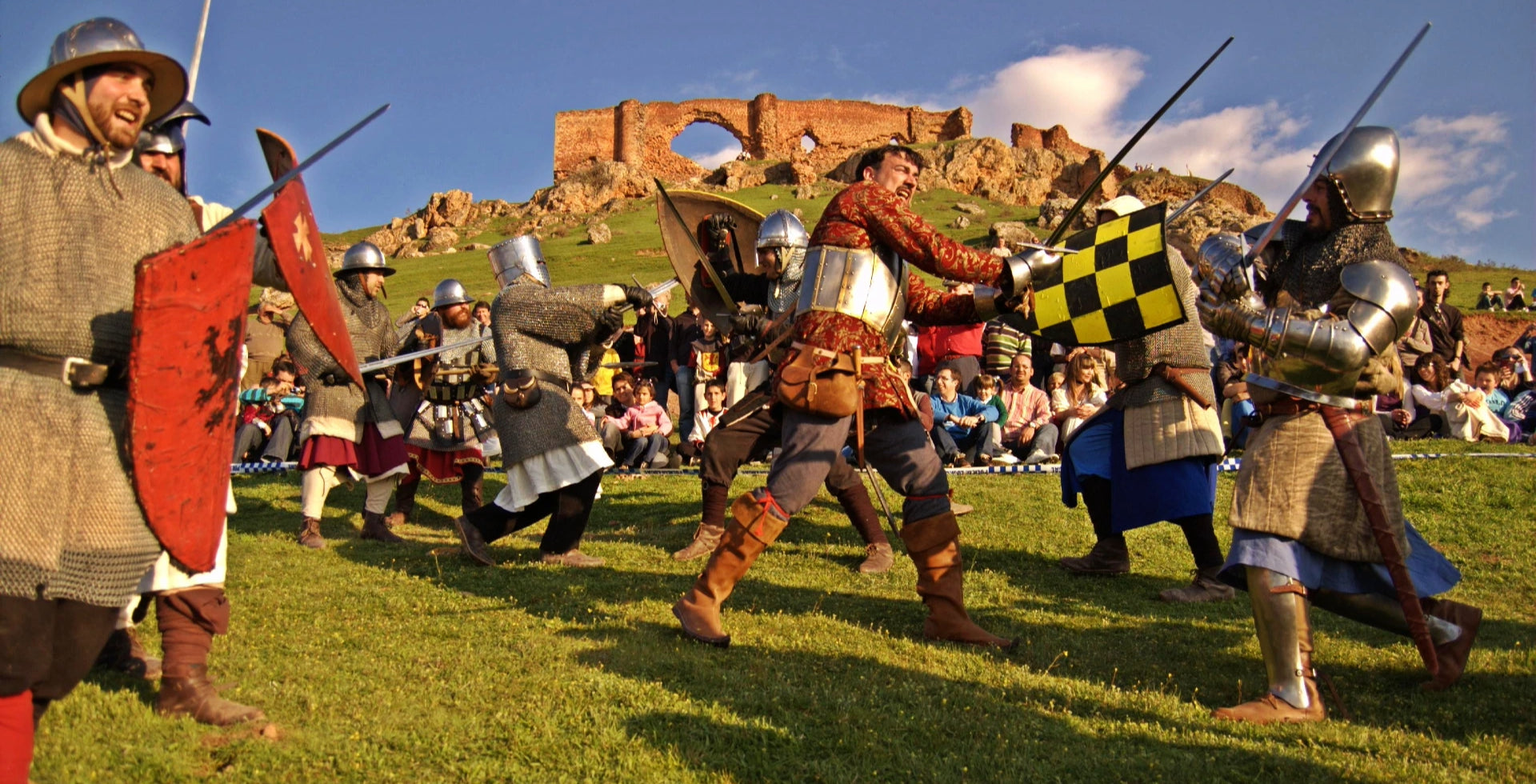
Historical fencing daggers are designed for the practice of HEMA (Historical European Martial Arts), a global movement that studies ancient combat treatises with swords, spears, and, of course, daggers.
Inspired by real weapons from the 13th to 17th centuries, these daggers combine handcrafted precision with modern safety.
They are used in controlled duels, tournaments, seminars, and recreations. HEMA practitioners employ these daggers to revive fighting styles such as those of Fiore dei Liberi or Joachim Meyer, who integrated the dagger into defensive techniques, holds, and disarms.
Those who use them—instructors, students, and military history enthusiasts—seek not only combat but also the transmission of European martial knowledge. In this context, the dagger is a symbol of practical wisdom, combat tradition, and historical discipline.
(Image of the Main Gauche, left-handed fencing dagger )
The dagger as an eternal symbol
Beyond its modern forms, the dagger retains its symbolic value. It has represented betrayal, as in the assassination of Julius Caesar; loyalty and honor, as in military ceremonies; ritual wisdom, as in lodges; and ancestral knowledge, as in historical fencing.
Today, far from being a simple weapon, the dagger is an object steeped in cultural symbolism. Whether in the hands of a modern soldier, a collector, a cadet in training, or a HEMA practitioner, it continues to reflect the profound connection between humanity, the art of combat, and history.