

In the collective imagination, the Vikings are remembered for their swords, axes, and longships, but one of the most representative—and often forgotten—objects of Norse culture was the Viking knife.
These tools, known for their functionality and symbolism, accompanied both warriors and peasants in their daily lives.
Among them, the seax stands out, a long knife that could function as a weapon or tool, a symbol of status and utility, although it is not the only one.
Below you'll find everything you need to know about these fascinating weapons and tools.

Origin and variety of Viking knives
Vikings made knives in different sizes and styles, from small blades for household tasks to combat knives.
The most recognized is the Scandinavian seax, characterized by its straight or slightly curved, single-edged blade with an angular tip.
This type of knife was common in Germanic and Anglo-Saxon territories, but the Vikings adopted it as part of their arsenal.
There were also more modest knives, used for carving wood, preparing food, building boats or hunting.
These were everyday items that were part of the basic equipment of any Viking, man or woman.

Materials and design
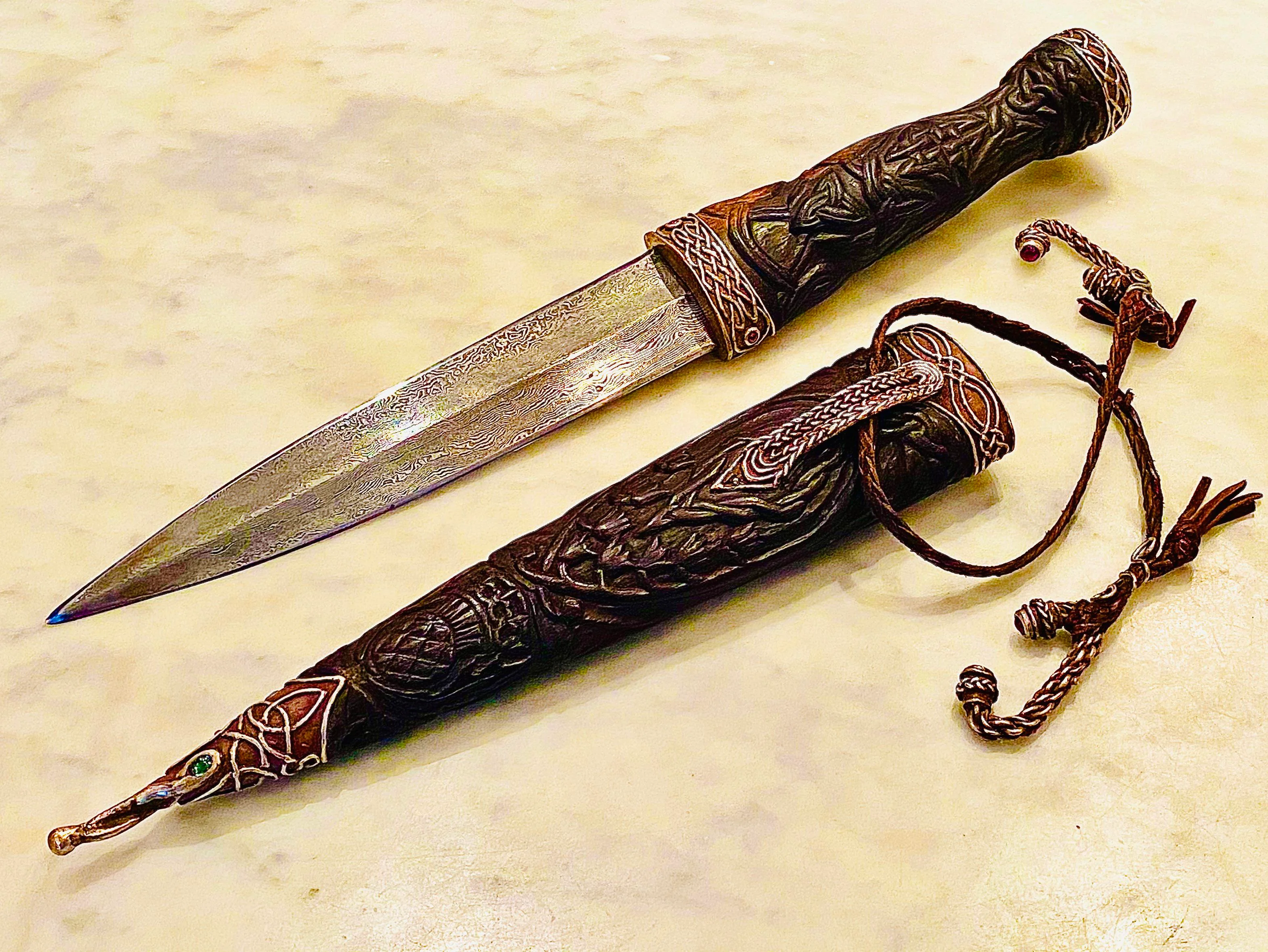
Viking knives were primarily forged from iron, although higher-quality examples combined steel with pattern welding techniques, producing decorative grain on the blade.
The handle, on the other hand, was made of wood, deer antler or bone, and was often decorated with carvings reflecting mythological scenes or geometric patterns.
The sheath was also important. Made of hardened leather, it protected both the blade and the wearer, and was often decorated with engravings or bronze rivets.

Symbolic and cultural function
The Viking knife was not only a practical tool, but also an object loaded with symbolism.
The seax, for example, was a sign of social status, worn by warriors and nobles as an extension of their identity.
Even in funerary rituals, knives have been found alongside the remains of the dead, suggesting their importance beyond earthly life.
In Norse mythology, weapons had souls, and many knives were baptized or blessed.
Some stories suggest that knives were considered protectors against evil spirits or bearers of ancestral power.

Viking knives in museums:
Archaeological treasures of the north
Numerous Viking knives have been found in archaeological excavations throughout Scandinavia, the British Isles, and the Baltic regions, and many of them are now housed in prestigious European museums.
These examples offer valuable insight into the design, materials, and everyday use of these pieces in Nordic life.
There are many places where they can be appreciated today.
The National Museum of Denmark houses an impressive collection of Viking knives, including several seaxes found in burial tombs.
At the Oslo Historical Museum, you can see knives decorated with runic inscriptions and finely carved bone handles.
The British Museum, for its part, preserves Viking knives discovered in settlements such as York (formerly Jorvik), showing both domestic and military use.
These objects are tangible testimonies of the Viking legacy.
The wear on the blades, the shape of the handles, or the art on their sheaths provide clues about who carried them, their profession, their status, and even their spiritual beliefs.
Far from being simple tools, Viking knives are authentic pieces of living history.

Viking knives today:
Between history and passion
Today, Viking knives are highly valued by collectors, historical reenactors, artisans, and lovers of Norse culture.
Many artisan makers faithfully reproduce models found at archaeological sites, while others design Viking-inspired knives using modern materials.
Their use has transcended history and museum displays to become part of medieval fairs, LARPs, and the collections of historians and private collectors. They also inspire contemporary pieces of functional or ceremonial cutlery.