

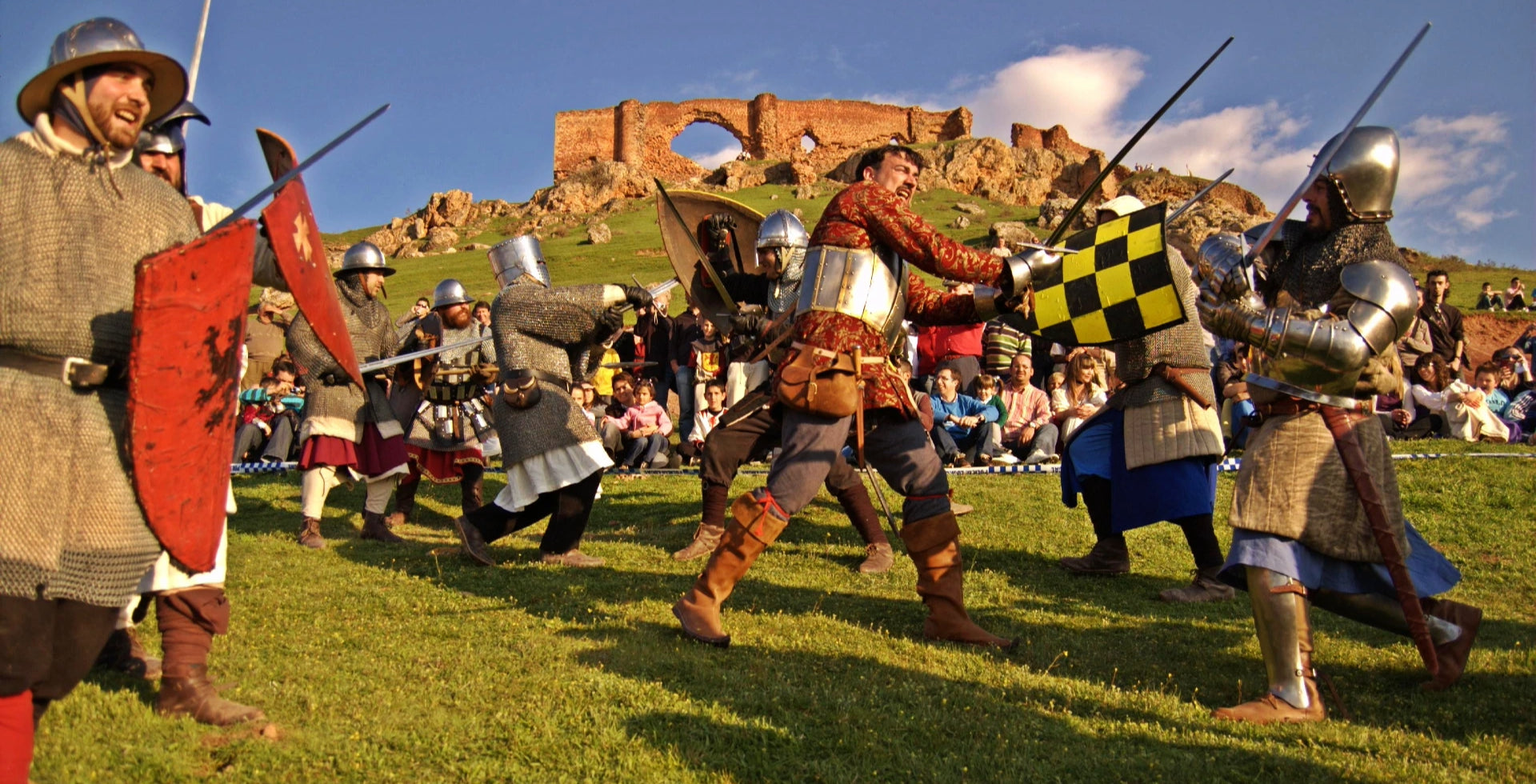


The Templar shields, beyond being simple defensive tools, were emblems laden with profound religious and military symbolism.
Used by members of the Order of the Temple during the Crusades (12th and 13th centuries), these shields not only protected the knight in combat, but also communicated his divine mission.
Recognizable by their distinctive red cross on a white background, Templar shields became a powerful image of militant medieval Christianity.
This article explores the history of these shields, their evolution, the different types that existed, and their current presence in historical collections and museums.
From the Holy Land to Western Europe, Templar shields have left an indelible mark on the history of medieval warfare.

Origin and evolution of the Templar shields
The Order of the Temple was founded in 1119, with the initial goal of protecting Christian pilgrims traveling to Jerusalem, and quickly became one of the most powerful and recognized military orders of the Middle Ages.
In this context, the shield was an essential part of Templar equipment, both in combat and symbolically.
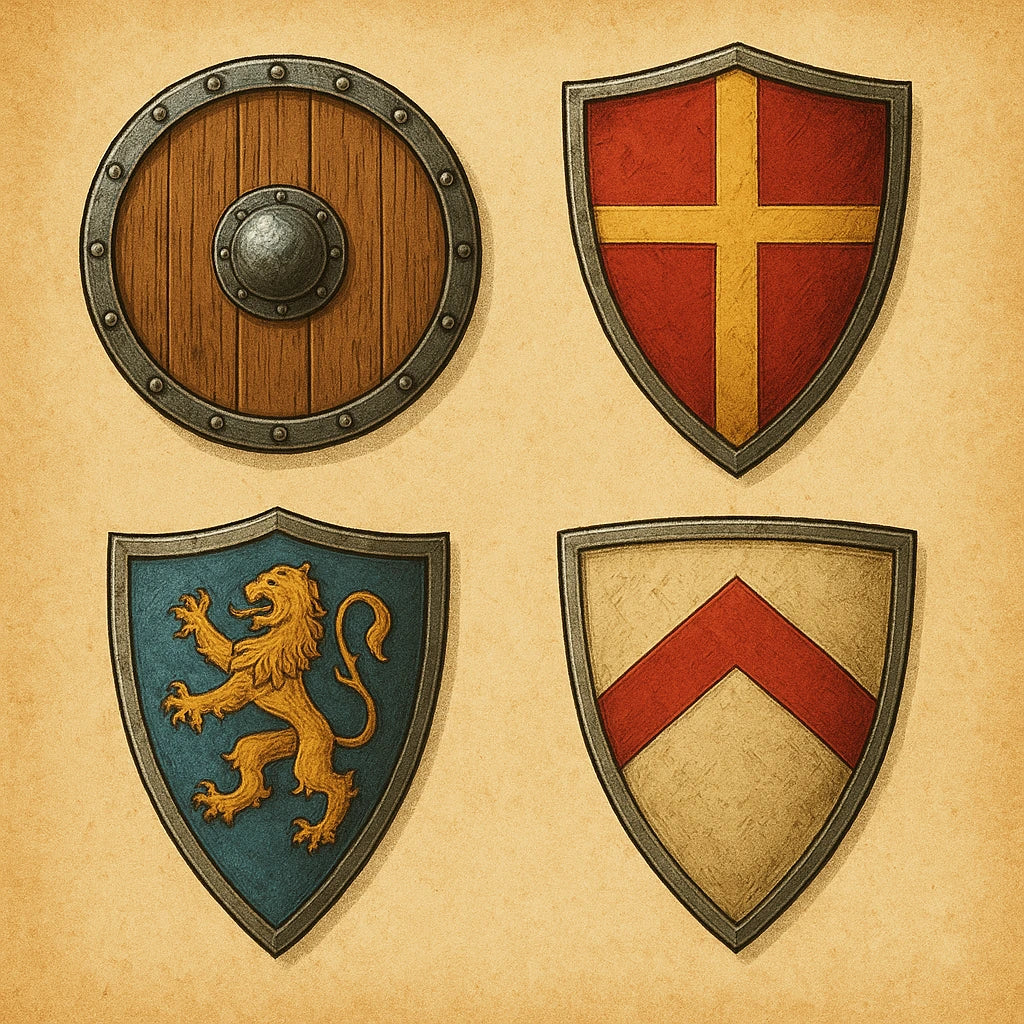
The first shields used by the Templars were of the inverted comet or teardrop type, inherited from the Norman designs of the 11th century.
Over time, these evolved into more rectangular or pointed shapes, known as "almond" shields, to adapt to new combat techniques and improve maneuverability.
Its size allowed it to protect a good part of the body in close formation, especially during mounted charges.
The white color of the shield represented the spiritual purity of the Order, while the red cross was a symbol of martyrdom and devotion to Christ.
This design was authorized by Pope Eugene III in 1147, during the Second Crusade, consolidating the Templar emblem as we know it today.
Types and uses of the Templar shield
Although the general design of the Templar shield was uniform in symbolism, there were variations depending on the bearer's rank, the campaign, and the period.
Several types can be distinguished:
- Norman shield or kite: long, narrow and curved, it was prevalent in the 12th century. It offered excellent cover in mounted combat.
- Almond shield (kite shield): shorter and more maneuverable, it was used in the transition towards the 13th century.
- Heater shield or flat shield: it appeared towards the end of the Crusades, more compact, and favoured close combat on land.
In battle, the Templar shield not only served to repel attacks, but also as an element of reconnaissance in the field.
Troops could easily identify members of their order by the shield, which helped maintain formation and discipline.
The shield also served as a personal standard when the knight could not carry a flag.
In addition to their military use, shields appeared in religious ceremonies, investiture ceremonies, and burials, being placed next to the body of the deceased knight as a symbol of his faith and cause.

Presence in museums and historical findings
Unlike swords and armor, medieval shields have survived in smaller numbers because they were mostly made of wood covered in leather or cloth, perishable materials. However, there are authentic pieces or reconstructions based on iconographic sources and manuscripts from the period.
Some of these are found in:
- Templar Castle of Ponferrada (Spain): museum with recreations of Templar weaponry and a collection of shields based on historical models.
- British Museum and National Archaeological Museum (Madrid): although they do not display complete original Templar shields, they do feature medieval iconography and art depicting the Order's coat of arms.
Stone reliefs, stained glass windows, and medieval illustrations that faithfully depict the design of the Templar shield are also preserved, helping to reconstruct its appearance and function.
Symbolic legacy
The Templar shield was much more than a defensive instrument: it represented the fusion of war and spirituality in the Middle Ages.
From its symbolic design to its use in combat and ritual, this shield embodies the very essence of the crusading knight.
Its evolution followed the history of the Order of the Temple and is still recognized today as one of the most powerful icons of the Crusades.
Although few authentic pieces have survived, its legacy lives on in museums, literature, and popular culture, reminding us of the ideal—and the conflict—that drove thousands of men to take up the sword for the cross.