




The sailor's knife is much more than a cutting tool. It is a symbol of nautical life, forged by the necessity and experience of sailors, fishermen, and navigators. Originating in Europe in the 18th and 19th centuries, its design was adapted to meet the challenges of working on board: cutting ropes, untying knots, working with sails, or even performing minor repairs.
Unlike other traditional knives, the sailor's knife incorporated a key piece: the unknotter or parrot beak , which allows for handling tight knots or wet ropes, something essential in sailing boats.
Its rust resistance, easy one-handed opening, and compact size made it an essential instrument in both the merchant and military navy.

Types of sailor's knife and their uses
Over time, the sailor's knife has evolved, and several types can be distinguished according to their design, materials, and number of functions.
Here's a list of the models that are still popular in today's nautical world, and are also the most appreciated by collectors and recreational sailors:
Classic sailor's knife
It has a stainless steel or carbon blade and a curved descaling tool.
Simple, sturdy, and moisture-resistant, it was primarily used for work involving ropes and sails.
Multipurpose sailor's knife
Equipped with additional tools such as a screwdriver, awl or can opener.
Widely used in the second half of the 20th century by both merchant sailors and soldiers.
White-capped razor
Made with a handle made of bone or resistant white plastic, it was common in the Spanish Navy and other European navies.
Its color made it easy to locate on deck, especially in an emergency situation.
Pocket knife with rescue hook
Modern model with a curved blade or belt-cutting hook, used today in maritime safety tasks.
It is common among port firefighters and coastal rescuers.
English sailor's knife (also known as a sailor's knife)
Very popular among British sailors since the 19th century.
Its compact structure, with a blunt-point blade and solid de-capper, was ideal for rapid maneuvers on deck.

Maintaining a sailor's knife
The maritime environment is particularly harsh on any tool, even the finest knife, so maintaining a sea knife requires careful attention.
- Cleaning after use: Salt water is corrosive. After each day, it is recommended to rinse with fresh water and dry thoroughly.
- Hinge Lubrication: A few drops of marine lubricating oil keep the mechanism smooth and functional.
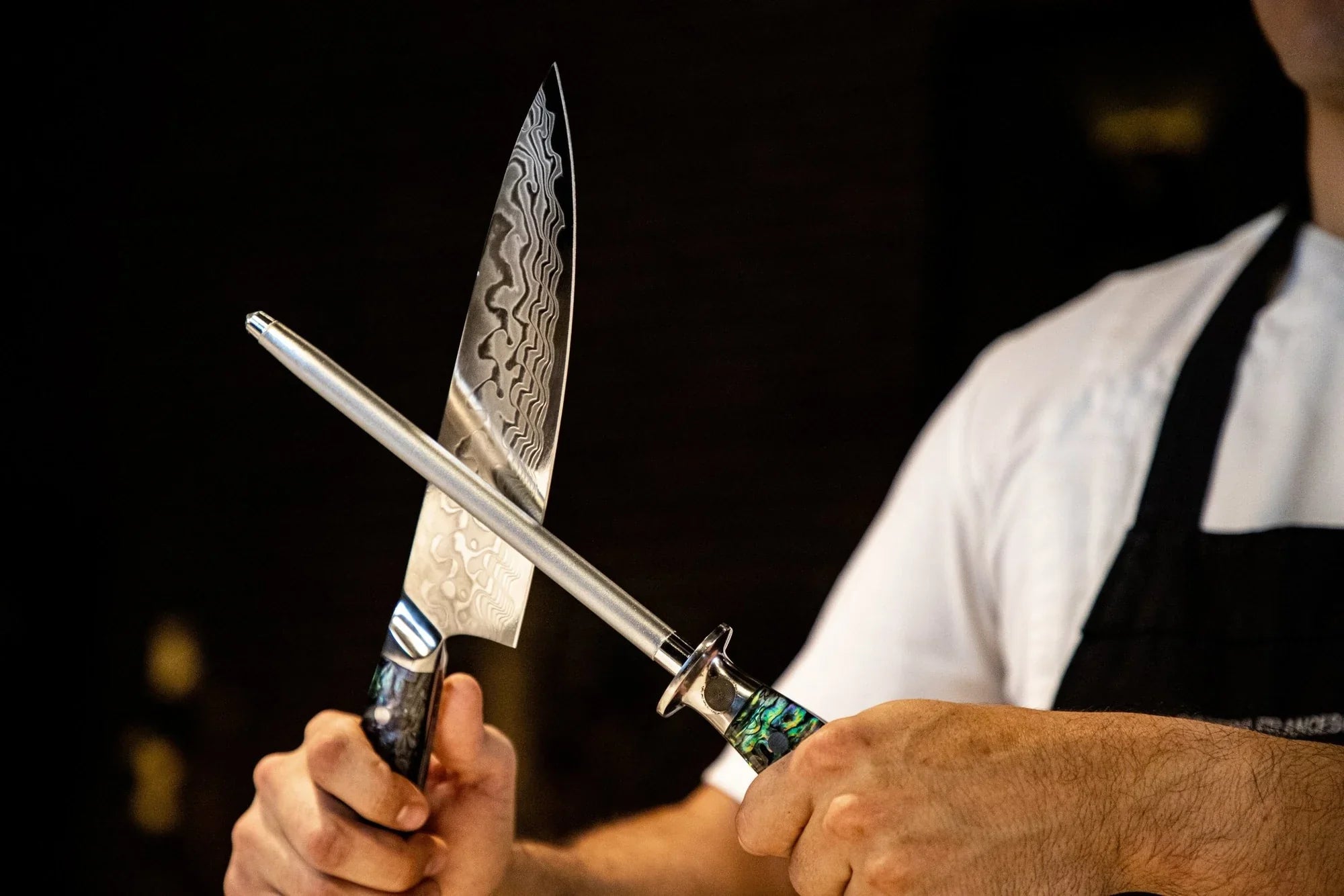
- Periodic sharpening: The blade must be kept sharp to ensure its effectiveness.
- Storage: Store in a dry place and, if possible, in a protective cover.
- Review of the uncapper: This part must be kept undeformed to function well with thick ropes/ropes.
With this care, a good knife can last a lifetime on board.

A tool whose usefulness transcends time
The sailor's knife has been, for centuries, an inseparable ally of the navigator.
Its functional design, durability, and adaptability to maritime work make it one of the most intelligent tools in nautical history. And it remains relevant today, both for its usefulness and for its historical and cultural legacy. It represents a life of effort, sea, and craftsmanship.