

Europe was the birthplace of multiple styles and traditions in sword making and use during the Middle Ages, reflecting both the tactical transformations and cultural influences of each era.
From the earliest Carolingian swords to the two-handed swords of the late Middle Ages, these weapons were an essential part of combat, social identity, and religious symbolism. Many of these pieces are now preserved in world-renowned museums, where they bear witness to centuries of military, political, and spiritual history.

The legacy of European swords
Medieval European swords evolved from the short weapons of antiquity to longer, stronger, and more versatile blades.
The Carolingian swords of the 9th century laid the groundwork for later styles, but it was between the 11th and 15th centuries that longswords and two-handed swords, designed to cut through increasingly complex armour, became established.
These forged steel examples showcase the skill of medieval blacksmiths and are on display at institutions such as the British Museum in London, the Musée de l'Armée in Paris, and the Deutsches Klingenmuseum in Solingen, Germany. Also notable are the sword attributed to Saint Maurice, preserved in Vienna, and the legendary Tizona of El Cid, preserved in the Museum of Burgos, Spain.

The swords of the military orders:
Templars, Hospitallers and Teutonic Knights
Christian military orders played a fundamental role in the history of medieval swords. The Knights Templar, Hospitallers, and Teutonic Knights combined monastic life with the art of war, and their swords reflected this duality. The weapons they carried were long, double-edged swords, straight and sturdy, symbolizing their sacred mission and military commitment.
These swords, often decorated with cross-patterns and Latin engravings, have been found in archaeological excavations in the Holy Land, Central Europe, and the Baltic.
Museums such as the Germanisches Nationalmuseum in Nuremberg or the Museum of the Order of St. John in London exhibit pieces that bear witness to the material and spiritual legacy of these orders.

Nordic and Viking swords
In Northern Europe, the Vikings developed swords that combined combat effectiveness with ornamental details.
Viking warriors carried one-handed swords, balanced for precise and powerful attacks.
Examples, found in ritual graves and archaeological sites in Scandinavia, England and Russia, often bear inscriptions in both Latin and runes, reflecting the cultural blending of Christianity and pagan beliefs. They can be seen, for example, in the National Museum of Denmark and the National Historical Museum in Stockholm, where weapons commemorating Viking raids and expansion in Europe are kept.

The swords of the Byzantine Empire:
Roman heritage in the Middle Ages
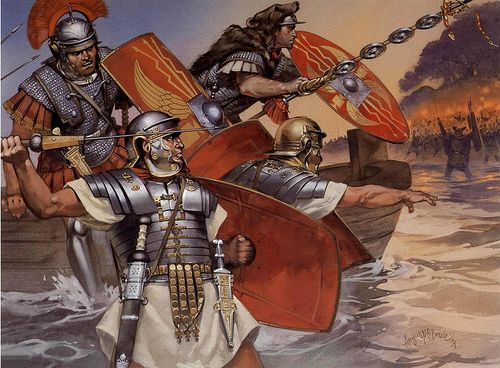
The Byzantine Empire was the direct heir of the Roman military tradition, adapting it to the medieval context of the eastern Mediterranean.
Their soldiers, called stratiotes , primarily used the spatha, a double-edged straight sword that evolved from the late Roman gladius. Paired with round shields and lamellar armor, these swords were versatile for both infantry and cavalry combat.
Later, from the 9th century, Persian and Arab influence became evident in the adoption of the paramērion, a curved sword similar to a sabre, used by the heavy cavalry of the Byzantine Empire.
These weapons can be found today in the Istanbul Archaeological Museum and the Byzantine and Christian Museum in Athens, demonstrating the continuity and transformation of Roman weaponry in a medieval Christian and Greek-speaking environment.

Swords of medieval knights:
symbols of power and honor
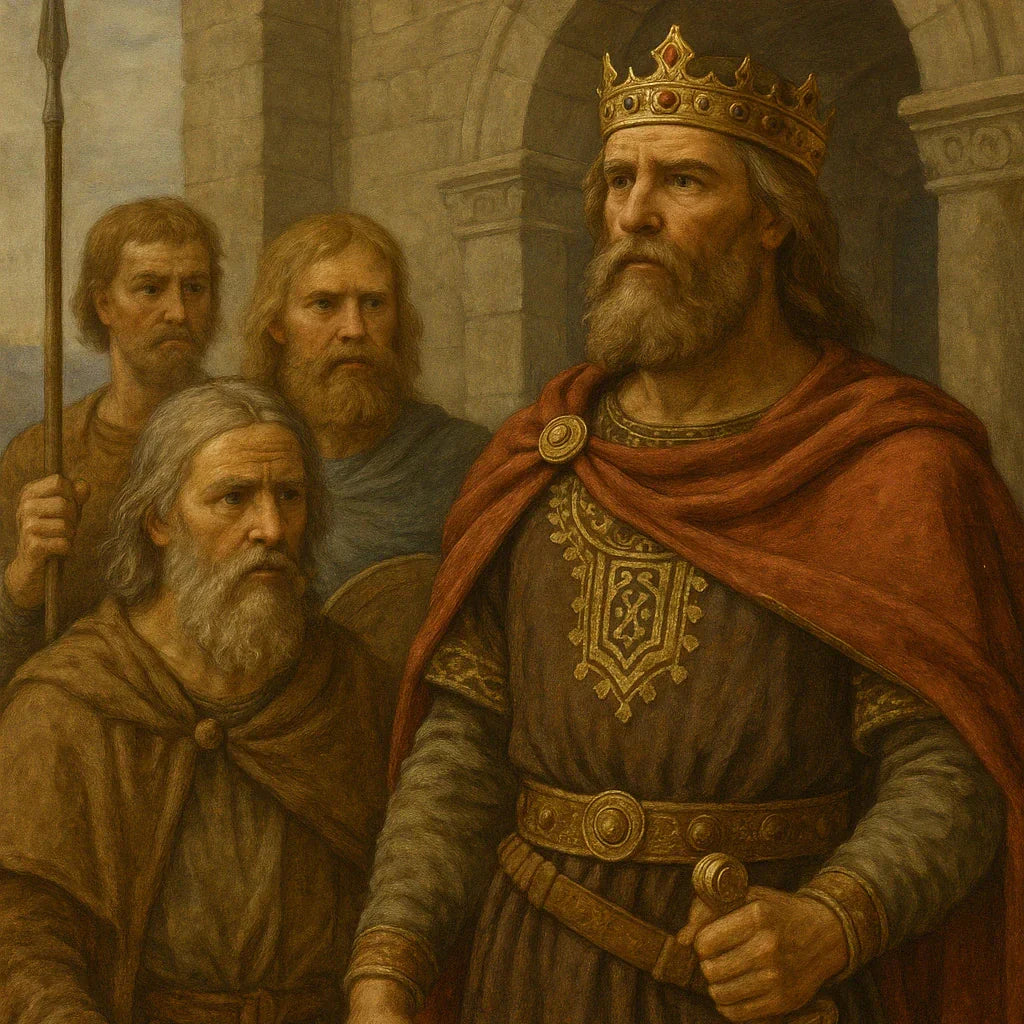
Beyond military orders, medieval European knights used swords that were not only weapons but also symbols of status, honor, and loyalty. These masterfully forged swords varied by region and period, but generally had straight blades, with handles designed for close combat and shield defense.
Swords were often inherited or presented at investiture ceremonies, with engravings and ornamentation reflecting lineage and achievements. Their cultural significance transcends warfare, featuring prominently in chivalric literature, such as Arthurian legends and epic poems.

Throughout Europe, throughout time
Medieval European swords constitute a profound historical and cultural legacy that goes beyond their military function. They represent the technical evolution of metallurgy, the influence of religion and social traditions on warfare, and the reflection of regional and personal identities.
Many of them, preserved in museums, symbolize power, faith, and a valuable historical legacy for Europe and the world.